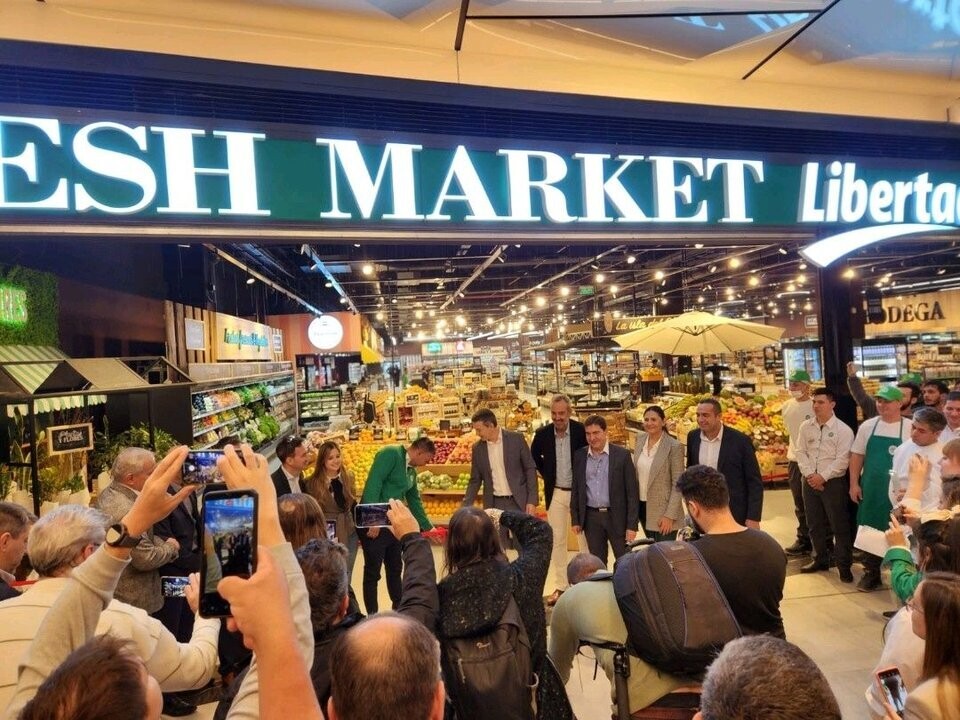
Buenos Aires, Feb. 4 (NA) -- The Córdoba-based holding company Libertad has concluded the Fresh Market experience that it opened three years ago at the DOT shopping center in the Saavedra neighborhood of Buenos Aires. The decision was determined by the group's regional sale, which led to strategic changes involving reinforcing its solid position in the central and northern parts of the country and ending its foray into the Buenos Aires area, as reported by the Argentine News Agency. The closure of the Fresh Market at DOT comes amid concern over events in San Juan, Misiones, and Mendoza, where the company went through staff cuts, voluntary retirement plans, and union protests. This is compounded by the confirmation that Libertad is evaluating offers if there are interested parties in acquiring its operations in Argentina. The rumor circulating is a sale to La Anónima, the traditional Patagonian supermarket chain. Libertad, part of the Salvadoran Calleja conglomerate, focused its commercial profile at the DOT store on fresh foods and replaced the classic supermarket concept with gondola aisles with the Libertad FAN (Frescos, Ahorro, Novedades - Fresh, Savings, News) format. It was developed through islands dedicated to high-quality fresh products in the categories of bakery, butcher, cold cuts, and cheeses, plus a bakery and a pizzeria with sourdough, staffed by specialized personnel. The store invested $3 million to occupy the space left by Walmart in the IRSA-owned shopping center and also became the first and only Libertad Fresh Market in the country. In Uruguay, a similar structure operates through Fresh Market Disco and Fresh Market Devoto, and in Colombia. The Salvadoran Calleja Group The Calleja Group bought the Argentine subsidiary from the French Casino at the beginning of 2024, as part of the Latin American assets of the Colombia-based Éxito group. It controlled the Libertad chain in Argentina, with a stellar presence in Córdoba and 10 provinces. It is led by former Salvadoran presidential candidate Juan Carlos Calleja Hakker. Its main business is a leading supermarket chain in that Central American country, operating under its Super Selectos brand, which locally has 110 stores and a market share close to 60%. The history of Libertad began in 1986 with a family transportation and sugar packaging company operating in a small warehouse in the city of Córdoba. It started as a small company with three employees and the marketing of 130 products. A year later, there were already 150 employees and more than 1,000 different products. In 1989, the first Wholesale Self-Service in Córdoba was inaugurated, with an area of 2,500 square meters on Calle Libertad, and from there the name given to the new venture. The company was acquired by the French Casino group in 1998, carrying out a strong expansion plan in the country. From owner to owner Within the framework of a reorganization of Grupo Casino's Latam operations, its Argentine subsidiary was incorporated into the Colombian Éxito group in 2015, forming a leading platform in Colombia, Brazil, Uruguay, and Argentina. In 2019, it launched its new corporate identity and consolidated as Grupo Libertad, integrating the activities of Retail and Real Estate and adding the e-commerce platform within the company's digital transformation. In 2022, Grupo Libertad opened its first Mini Mayorista Libertad, and in 2023, it arrived at the Autonomous City of Buenos Aires with the Libertad Fresh Market format. At the beginning of 2024, Grupo Libertad, along with its Colombian and Uruguayan subsidiaries, became part of the Calleja Group, a leading supermarket chain from El Salvador.